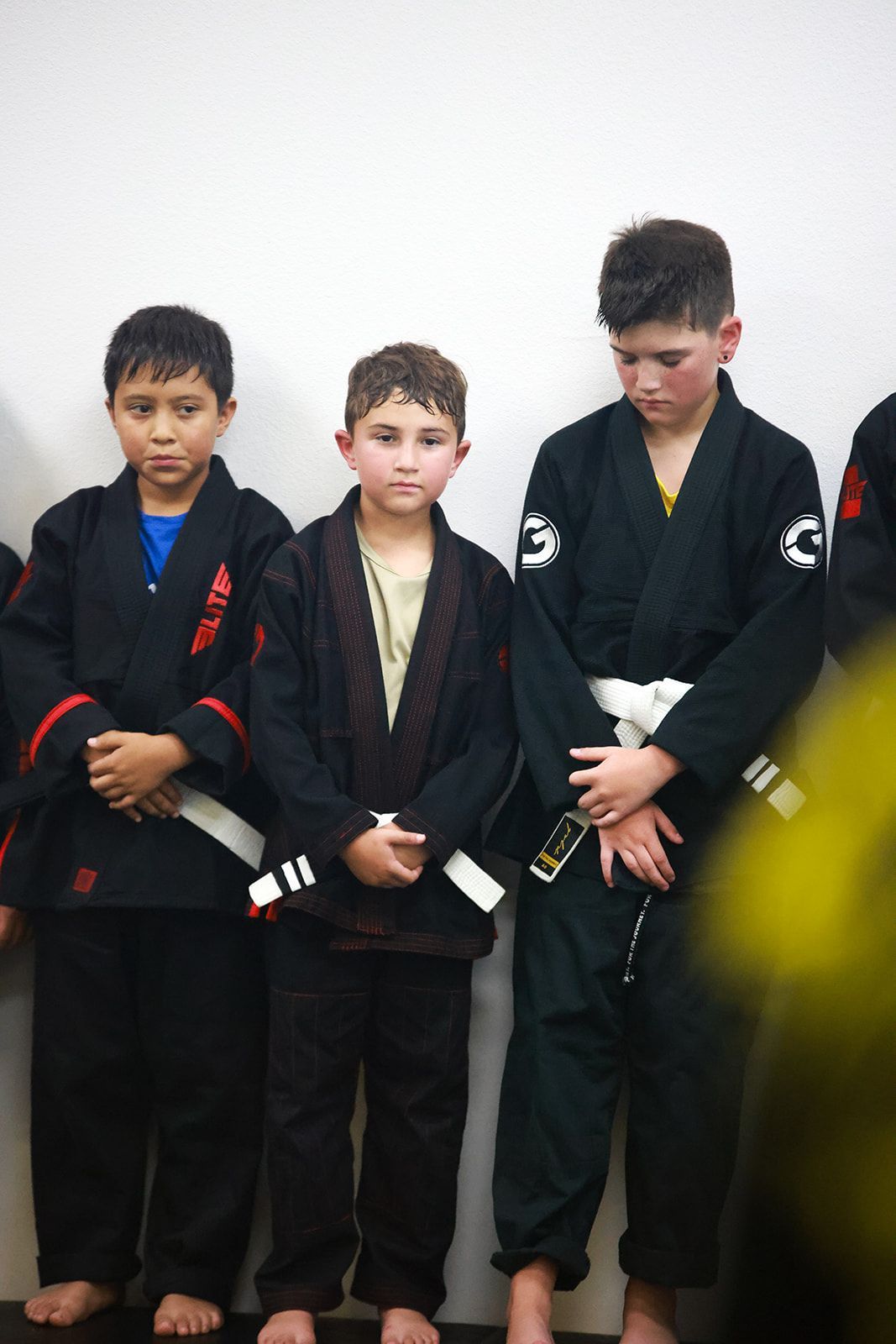
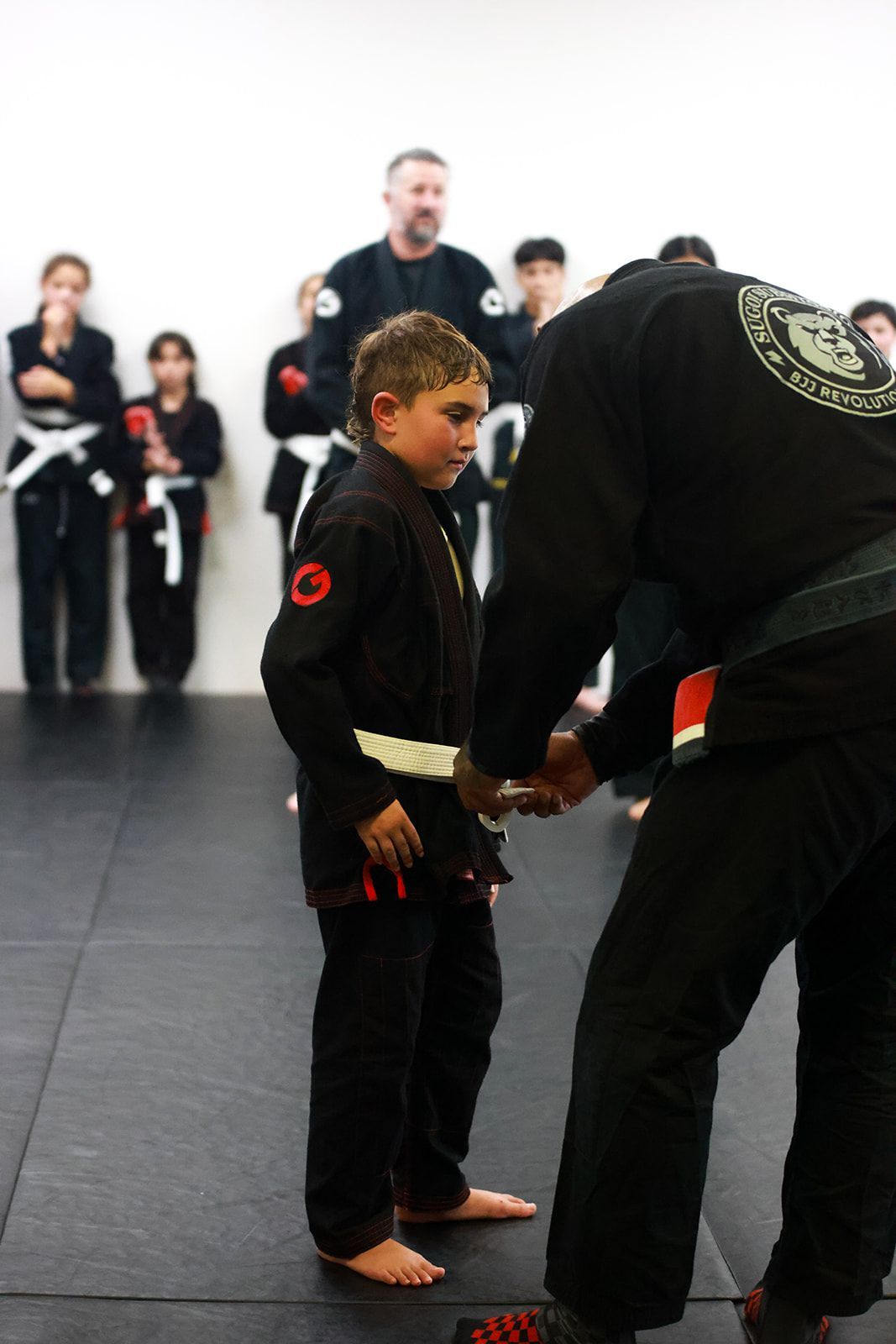
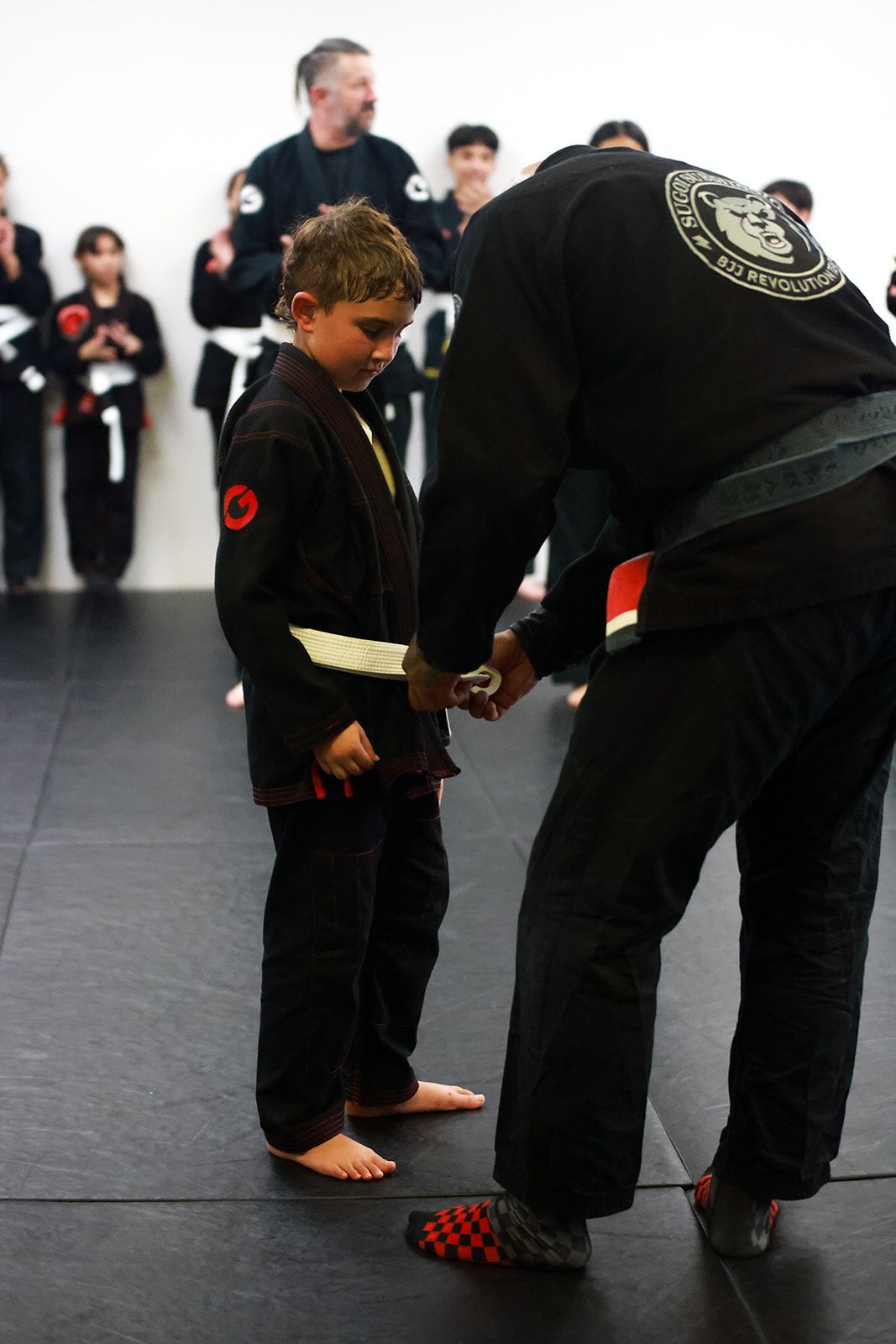
Corpus Christi families are choosing a sport that builds real confidence, steady discipline, and practical self-defense.
Youth Brazilian Jiu-Jitsu has become one of the most talked-about after-school activities in Corpus Christi, and we understand why: parents want something that helps kids move their bodies, manage big emotions, and learn to handle pressure without turning practice into a stressful second job. Around the city, youth programs are easier to find than ever, and that convenience matters when you are balancing school pickup, dinner, and homework.
We also see a big shift in what families want from martial arts. Many parents are not looking for a tough-guy culture or a competition-only pipeline. Instead, Youth Brazilian Jiu-Jitsu is showing up as a skill-based, structured way to develop confidence, self-control, and a sense of belonging, right here at home in South Texas.
And it is not just a local trend. Industry roundups estimate Brazilian Jiu-Jitsu has millions of practitioners worldwide and hundreds of thousands in the U.S., with school-age kids often representing the largest slice of youth membership. When something works for families, word travels fast, especially in a community like ours.
Why Youth Brazilian Jiu-Jitsu feels like the right fit for Corpus Christi families
Corpus Christi has a surprisingly dense youth training ecosystem. Local directories regularly list double-digit options for children and teen classes citywide, which usually signals two things at once: strong demand from families and enough supply to support age-based programs. In plain terms, if a lot of parents are signing kids up, more class times and age groups tend to follow.
That density also makes Brazilian Jiu-Jitsu in Corpus Christi feel accessible. Families do not necessarily have to drive across town at rush hour to find training that matches a child’s age and energy level. With programs spread across common neighborhoods and school corridors, Youth Brazilian Jiu-Jitsu in Corpus Christi, TX becomes a realistic weekly routine rather than a once-in-a-while activity.
Another reason the sport is growing is that many local programs start young, often around ages 3 to 6, with separate groups for bigger kids and teens. For parents, that early entry point is huge. You can introduce a structured activity before habits set hard, and kids can grow into the room gradually instead of being tossed into a mixed-age class where nobody feels comfortable.
What your child actually learns in Youth Brazilian Jiu-Jitsu
At first glance, Brazilian Jiu-Jitsu looks like grappling, and it is. But what we teach goes beyond moves. Youth Brazilian Jiu-Jitsu rewards patience, listening, and problem-solving, because kids learn that technique beats thrashing. That is a useful lesson at eight years old, and honestly, it stays useful forever.
Training usually starts with foundations: posture, base, movement, and simple control positions. We spend time on how to fall safely, how to keep calm when someone is close, and how to use leverage instead of strength. For smaller kids, this matters because it makes success feel possible quickly, even if the child is not naturally athletic.
As students progress, we introduce more decision-making. Kids begin chaining steps together: control, improve position, attempt a safe submission, reset if it is not working. It is like learning a physical form of chess, except the board is your balance, your breathing, and your ability to stay focused.
Here are a few core outcomes many parents notice over time:
• Better body awareness, including coordination, balance, and comfort with safe contact
• Improved self-control, because progress requires following directions and pacing effort
• More resilient confidence, since kids practice mistakes and learn to recover calmly
• Stronger social skills, because partner work teaches cooperation and respect
• Practical self-defense habits centered on control rather than striking
Those are not just marketing phrases. Research on BJJ and related youth training consistently points toward improvements in confidence, emotional regulation, social connection, and reduced aggression when training is coached responsibly and kept structured.
Why parents like that BJJ is control-based, not strike-based
A common reason families lean toward Youth Brazilian Jiu-Jitsu is that it emphasizes control, leverage, and positional problem-solving. In a well-run kids program, we are not asking children to trade punches. We are teaching them how to manage distance, stay safe, and escape bad positions, which often feels more age-appropriate for many parents.
This control-first approach also supports safety culture. When kids learn to slow down, use technique, and respect taps, the room becomes calmer. That calm matters, because kids do not just bring energy, they bring moods from school, sibling drama, and days that feel long. A controlled training environment gives that energy a place to go without letting it run wild.
For many families exploring Brazilian Jiu-Jitsu in Corpus Christi, the appeal is simple: it is a real martial art with real self-defense value, but it can be taught in a way that stays measured, supervised, and skill-focused.
Ages, stages, and what to expect from the first few months
Parents often ask what age kids can start. Locally, many programs begin around 3 to 6, with some classes built specifically for very young students. In practice, readiness matters as much as age. If your child can follow simple directions, take turns, and stay on the mat for a short class, it is usually a good sign.
We typically think in stages:
Little kids (roughly ages 3 to 6)
Classes are shorter, more structured, and built around basic movement, listening skills, and simple partner drills. We keep it playful, but not chaotic. There is a difference.
Big kids (roughly ages 7 to 12)
This is often the sweet spot for learning quickly. Kids can focus longer, remember sequences, and start applying techniques with intention. National participation data often points to this age band as a major driver in youth membership, and that matches what we see day to day.
Teens
Teens usually want training that feels real and challenging. We aim for technical depth, practical problem-solving, and a culture that respects maturity. Teens also benefit from having a place where effort is noticed and improvement is measurable, especially during busy school years.
No matter the age, the first few months should feel like building a base. Kids learn the room rules, how to partner up, how to be a good teammate, and how to handle frustration when something does not click on the first try.
Safety in Youth Brazilian Jiu-Jitsu: what matters most
Is Youth Brazilian Jiu-Jitsu safe is a fair question. Any sport has risk, and grappling is contact-based, so we take safety seriously and expect you to ask about it. The difference comes down to structure: supervision, rules, partner matching, and a coaching style that values control over ego.
In youth classes, we keep techniques age-appropriate and reinforce tapping early. We also build habits that reduce rough collisions, like moving with awareness and keeping a stable base. When kids learn to slow down and use technique, training becomes smoother and safer.
If you are evaluating a program, pay attention to the details that signal good safety culture:
1. Clear mat rules that kids can repeat back, not vague reminders
2. Consistent partner matching by size, maturity, and experience level
3. Coaches who stop unsafe behavior immediately, every time
4. A curriculum that progresses from basics to complexity without skipping steps
5. A room vibe that rewards learning, not winning every round
That combination tends to protect beginners and keep experienced kids improving without unnecessary intensity.
Confidence and behavior: why training often carries into school and home
Parents often tell us the biggest changes show up outside the gym. Youth Brazilian Jiu-Jitsu gives kids a place to practice composure in real time. When a child learns how to stay calm under pressure on the mat, everyday stress starts feeling more manageable.
Confidence grows in a specific way here. It is not bravado. It is the quiet kind that comes from repeated effort, small wins, and learning that you can handle discomfort without falling apart. Studies and reviews on BJJ participants, including youth, often describe gains in self-control, resilience, social connection, and a healthier outlet for energy.
We also like that progress is visible. A child can feel stuck one week, then suddenly a small detail clicks. That experience teaches patience and persistence, and it tends to be more believable to kids than a pep talk.
Practical parent questions: schedule, gear, and cost in Corpus Christi
Logistics matter. In a city where families juggle school, work, and traffic patterns, the best program is the one you can attend consistently. Many Corpus Christi programs offer multiple weekly time slots for youth groups, and trial classes are common in the area, which makes it easier to start without overthinking the decision.
For gear, beginners usually need a few basics. Some families start with loaner gear for a trial, then buy their own once a child commits. You can expect:
• A uniform or no-gi training clothes depending on the class format
• A mouthguard for kids who prefer extra protection during drills
• A water bottle and basic hygiene items, because close-contact sports require cleanliness
• A small gym bag to keep everything organized and easy to grab after school
Cost is another common question. Local listings often note that kids pricing is not always published publicly, but many families in Corpus Christi see youth memberships fall roughly in the 100 to 180 per month range depending on schedule and inclusions. The most useful way to evaluate cost is to match it to attendance. Consistency is what makes it worthwhile.
Youth Brazilian Jiu-Jitsu compared to other activities kids do
We never pretend BJJ is the only worthwhile activity. But Youth Brazilian Jiu-Jitsu offers a mix that is hard to replicate in one place: physical fitness, self-defense skills, and personal development built into the training method.
Team sports can be fantastic for social growth, but playing time and roles can vary a lot. In BJJ, progress is individual and measurable. Kids earn improvement through repetition and coaching, and everyone gets to practice, not just the fastest or tallest athlete.
Traditional striking arts can build coordination and discipline too, but many parents appreciate that BJJ stays focused on control and problem-solving. Kids learn how to manage contact in a way that often feels grounded and practical for real situations.
And for kids who are not drawn to ball sports, Youth Brazilian Jiu-Jitsu in Corpus Christi, TX can become the thing that finally clicks, because it rewards curiosity, persistence, and small technical details.
Take the Next Step
If you are noticing Youth Brazilian Jiu-Jitsu popping up everywhere in Corpus Christi, it is not a fad. It is a response to what families actually want: structured coaching, real self-defense skills, and a community that helps kids grow without turning training into constant pressure. When the environment is supportive and the curriculum is progressive, kids thrive.
We built our youth path at
Sugoi Submission to make that first step simple and welcoming, whether your child is brand-new, naturally shy, or bursting with energy and needs a constructive outlet. When you are ready, we will help you choose the right class group and ease into the routine in a way that feels sustainable.
Become part of a supportive community dedicated to growth, respect, and
continuous improvement at Sugoi Submission.